What is a Migraine?
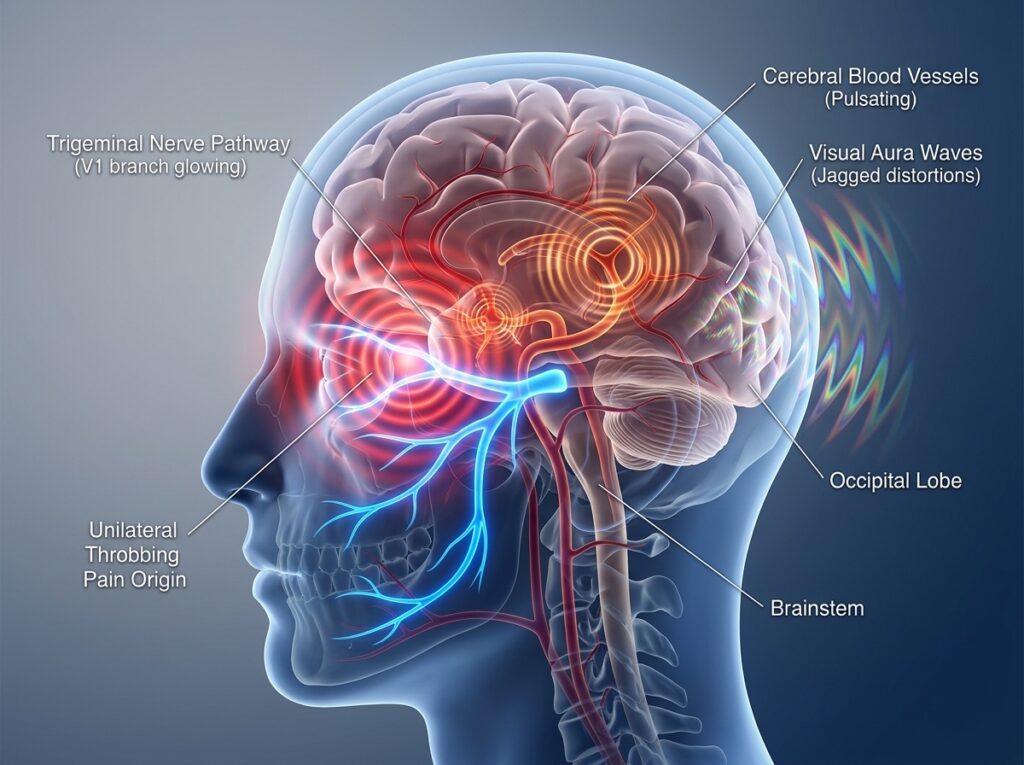
A migraine is far more than a standard headache; it is a severe, debilitating neurovascular condition characterized by intense, throbbing, and pulsating pain that typically strikes one side of the head (unilateral cephalalgia). Migraine attacks can last anywhere from several hours to three agonizing days, completely incapacitating individuals and preventing them from working, driving, or tolerating basic household light and sound.
Migraines are driven by neurochemical instability, abnormal neuronal firing in the brainstem, and erratic blood vessel spasms—where cerebral blood vessels first constrict and then violently dilate, irritating the sensitive trigeminal nerve pathways. Migraines are frequently preceded or accompanied by a sensory “aura” (visual blind spots, zig-zag flashing lights, or facial tingling). Standard medical care relies on daily preventive medications and powerful triptan painkillers that only temporarily mask the pain while triggering rebound headaches, stomach ulcers, and chemical dependency.

Common Symptoms
- Intense, pulsating, throbbing pain concentrated on one side of the head, forehead, or eye temple.
- Extreme photophobia (hypersensitivity to light) and phonophobia (hypersensitivity to sounds).
- Visual aura symptoms including flashing lights, blind spots, shimmering halos, or distorted vision.
- Severe nausea, vomiting, dizziness, and intense abdominal discomfort during headache peaks.
- Scalp tenderness, neck stiffness, and painful tension extending down into the shoulders.
- Post-drome "migraine hangover" causing cognitive fog, emotional exhaustion, and weakness for days.

How Neurotherapy Cures Migraines
Neurotherapy cures migraines and chronic tension headaches by addressing the twin root causes: cerebral vascular dysregulation and gastrointestinal toxicity (the gut-brain connection). In Neurotherapy science, most severe one-sided headaches are triggered by trapped abdominal gases and acidic toxicity that travel upward, combined with cervical nerve root compression.
The Neurotherapy practitioner applies gentle, specialized pressure on the **Medulla reflex points** and cervical vertebrae to normalize intracranial blood flow and balance cerebral serotonin levels, immediately relieving vascular spasms around the trigeminal nerve. Concurrently, activating the **Gallbladder and Liver points** releases trapped stomach gas, balances digestive bile secretions, and relieves hepatic congestion. Patients experience immediate, soothing relief during acute attacks and achieve lasting freedom from recurring migraines without painkillers.