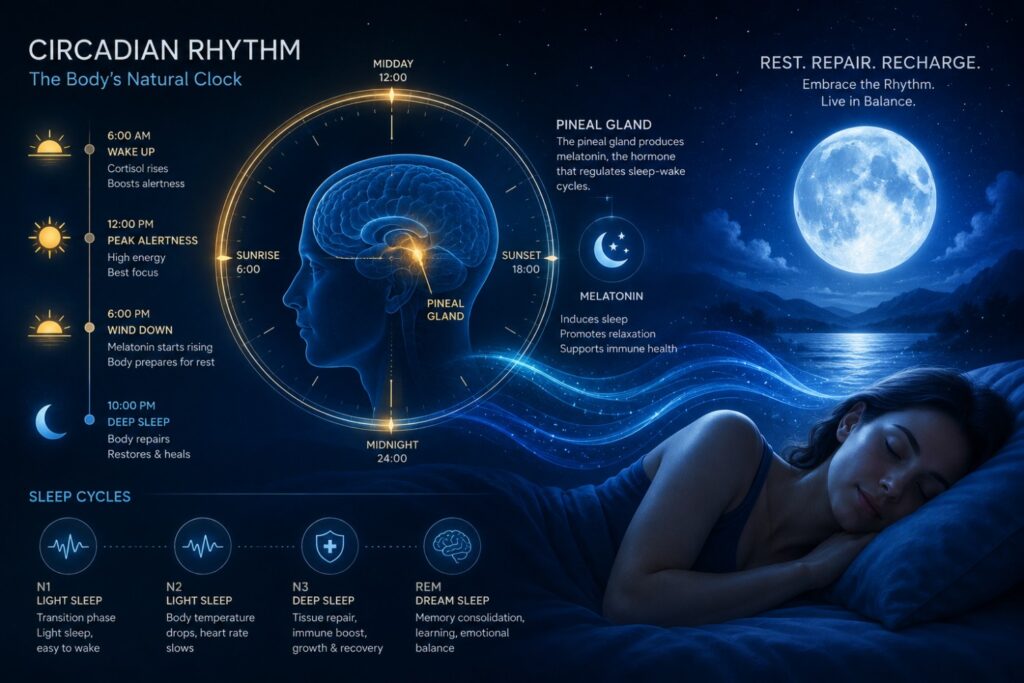
What is Insomnia?
Insomnia is a chronic sleep disorder in which an individual struggles to fall asleep, stay asleep, or achieve deep, restorative sleep. While many dismiss a few sleepless nights as a minor inconvenience, chronic insomnia is a severe condition that can slowly deteriorate both mental and physical health. It disrupts the body’s circadian rhythm (the internal 24-hour clock) and prevents the brain and body from undergoing crucial nightly repair processes.
Long-term insomnia creates a vicious cycle of fatigue and stress. It severely impairs cognitive function, weakens the immune system, and drastically increases the risk of developing secondary health conditions such as hypertension, severe anxiety, and clinical depression. Quality sleep is the foundation of good health, and treating insomnia is critical for overall well-being.

Common Symptoms
- Difficulty falling asleep at night despite feeling exhausted.
- Waking up frequently during the night and struggling to fall back asleep.
- Waking up too early in the morning and feeling unrefreshed.
- Waking up too early in the morning and feeling unrefreshed.
- Lack of concentration, poor memory, and frequent mood swings.
- Tension headaches and severe strain in the eyes.
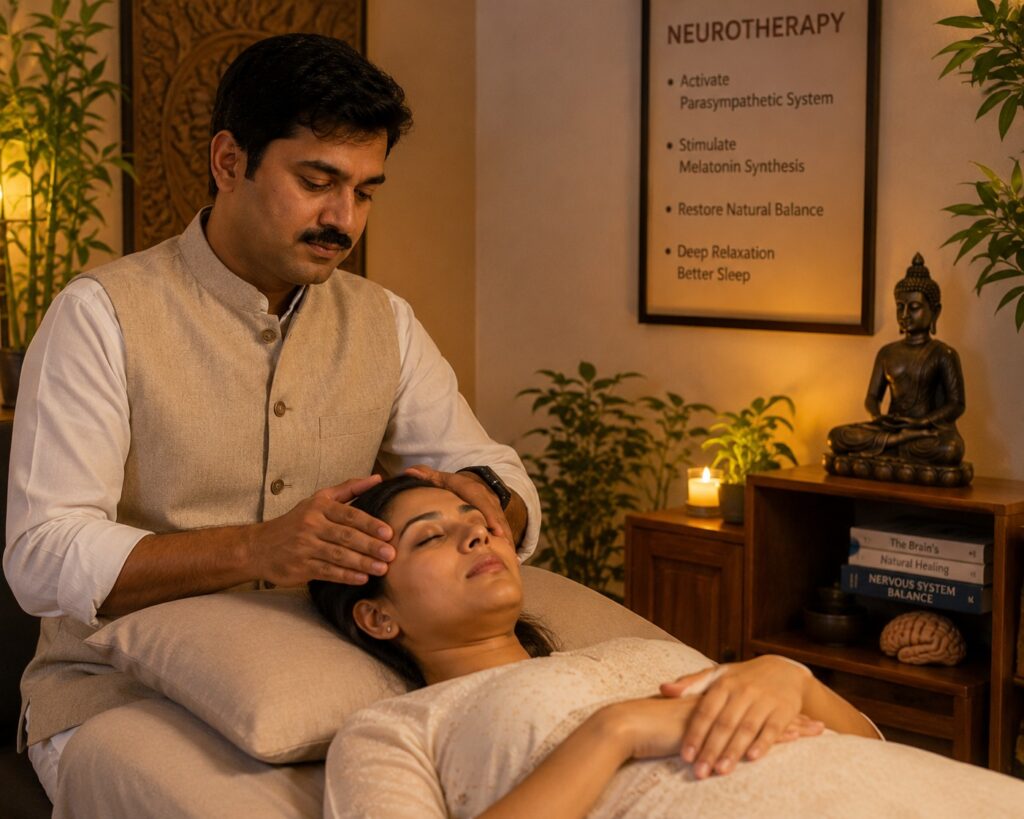
How Neurotherapy Cures Insomnia
Modern medicine often treats insomnia with sedatives or sleeping pills, which can be highly addictive and cause long-term side effects. Neurotherapy, on the other hand, corrects the underlying neurological and chemical imbalances causing the sleep disturbance. In Neurotherapy, insomnia is viewed as an overactive sympathetic nervous system (fight-or-flight response) and a deficiency in sleep-inducing hormones.
The therapy uses targeted pressure points to stimulate the parasympathetic nervous system, inducing a deep state of physical and mental relaxation. By activating specific glands, Neurotherapy naturally encourages the brain to produce vital neurotransmitters and hormones like Serotonin and Melatonin, which are essential for initiating and maintaining sleep. Additionally, the therapy reduces cortisol (the stress hormone) levels in the blood, calming the mind and allowing the patient to return to a healthy, natural, and uninterrupted sleep cycle.