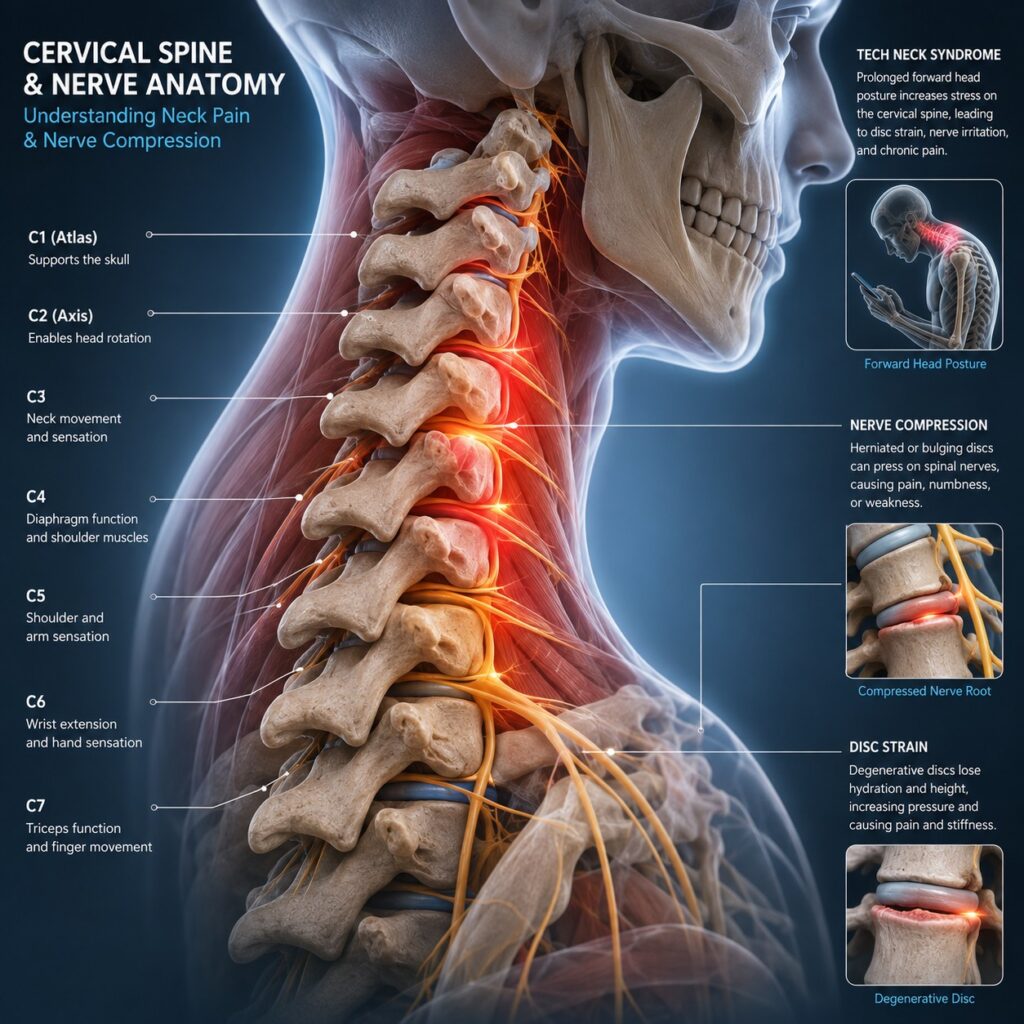
What is Cervical Pain (Cervical Spondylosis)?
Cervical Spondylosis, commonly referred to as cervical pain, is a condition characterized by acute or chronic pain in the neck and shoulder region. It is primarily caused by the wear and tear of the spinal disks in the neck. In today’s digital era, this condition has become rampant due to prolonged hours spent hunched over computers and smartphones – a phenomenon often called ‘Tech Neck.’
The cervical spine consists of delicate vertebrae, nerves, and muscles that support the heavy weight of the head. When poor posture, strain, or aging causes these cervical disks to degenerate, it can lead to nerve compression. This not only causes severe neck pain but can also trigger a cascade of secondary issues that severely disrupt daily life and productivity.

Common Symptoms
- Stiffness, soreness, and sharp pain in the neck.
- Pain that radiates down to the shoulders, arms, or even the hands.
- Frequent headaches that originate from the back of the head or neck.
- Muscle spasms and a severely restricted ability to turn the head.
- Numbness, tingling sensations, or weakness in the arms and fingers.

How Neurotherapy Cures Cervical Pain
Treating cervical pain requires more than just applying pain-relief ointments; it requires structural correction and nerve decompression. Neurotherapy achieves this through highly specialized, non-invasive physical adjustments and pressure point stimulation.
The neurotherapist focuses on relaxing the hyper-tense muscles around the cervical spine, which immediately reduces muscle spasms. By improving localized blood circulation to the neck area, the therapy reduces spinal inflammation and helps heal the damaged tissues. Furthermore, Neurotherapy helps correct subtle misalignments, relieving the pressure on trapped cervical nerves. This comprehensive approach provides immediate relief from stiffness and long-term protection against the recurrence of cervical spondylosis.