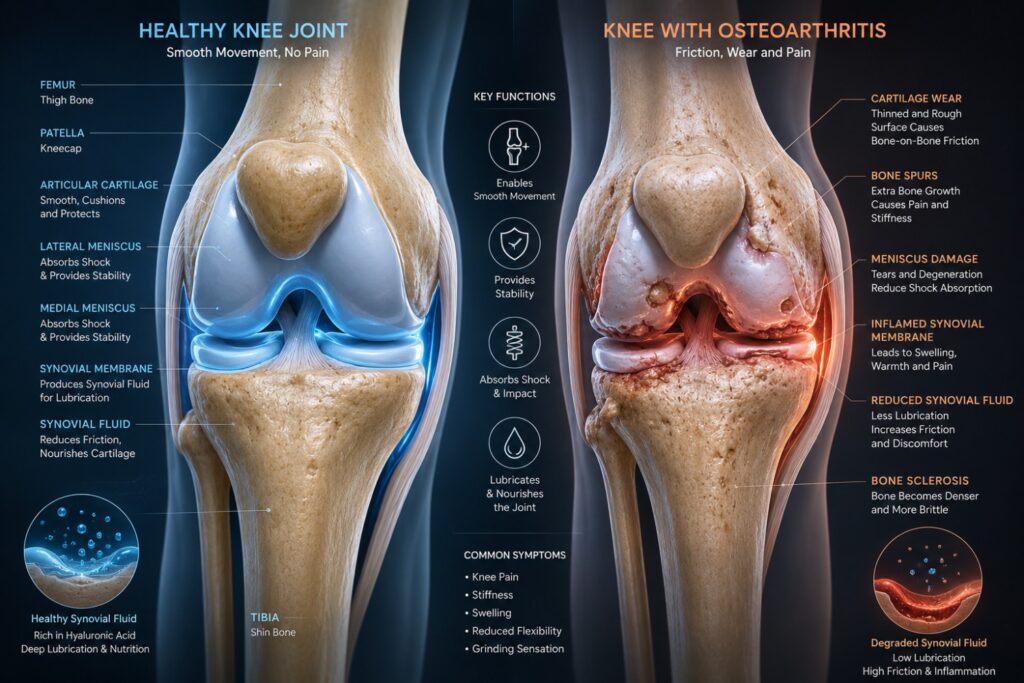
What is Knee Pain?
Knee pain is a highly prevalent condition that affects the knee joints, severely impacting an individual’s mobility and independence. The knee is one of the most complex and weight-bearing joints in the human body. Because it absorbs a massive amount of stress during everyday activities, it is highly susceptible to wear and tear, injury, and degradation.
Knee pain can stem from various causes, including osteoarthritis, ligament injuries, sudden weight gain, or even a sedentary lifestyle leading to muscle weakness. As the protective cartilage wears away or the joint fluid dries up, the bones begin to rub against each other, causing excruciating pain. This condition is particularly prominent among the elderly but is increasingly seen in younger individuals due to poor lifestyle habits.

Common Symptoms
- Aching, sharp, or throbbing pain in, behind, or around the knee joint.
- Visible swelling, redness, and a feeling of heat around the knee.
- Severe stiffness, especially after periods of inactivity or resting.
- Difficulty or inability to walk, run, climb stairs, or bear weight.
- Popping, clicking, or crunching noises (crepitus) during knee movement.
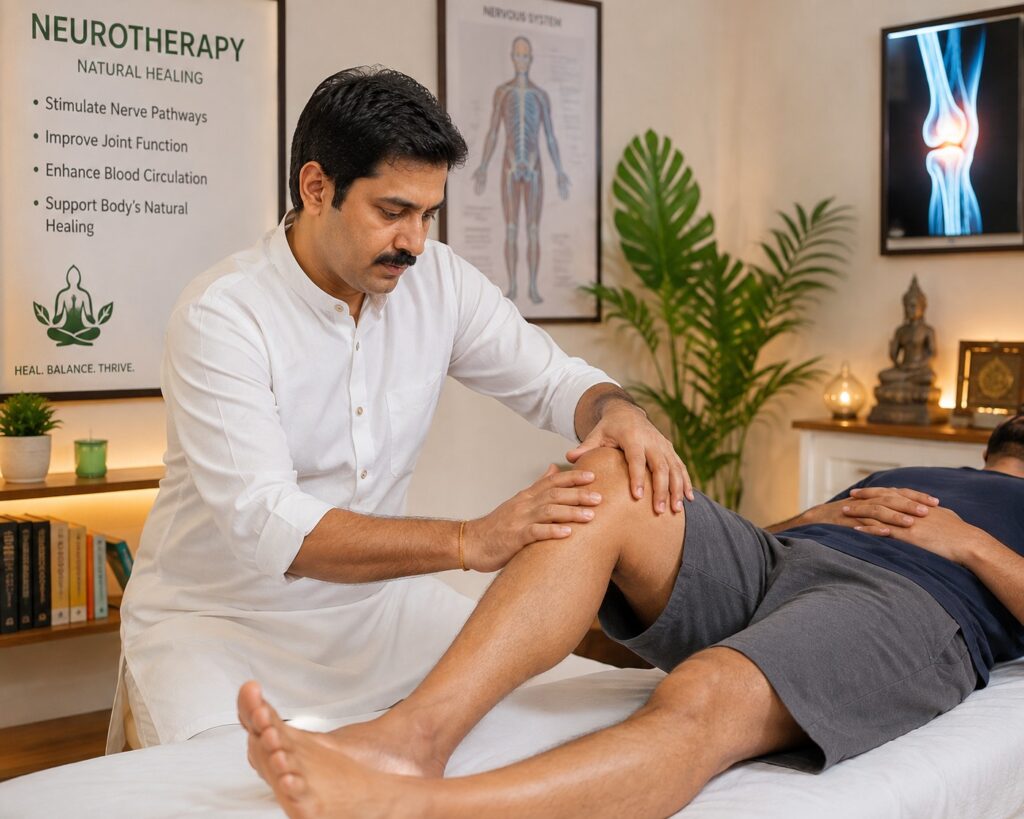
How Neurotherapy Cures Knee Pain
Knee replacement surgeries are invasive and risky, making natural alternatives highly sought after. Neurotherapy tackles knee pain by addressing the biological environment of the joint itself. A key reason for chronic knee pain is the depletion of synovial fluid—the body’s natural joint lubricant.
Neurotherapy uses targeted treatments to improve the blood supply to the knee area and stimulate the local glands and tissues to naturally increase the production of synovial fluid. This immediate lubrication reduces bone friction and drastically lowers pain. Additionally, Neurotherapy helps flush out uric acid crystals that may be lodged in the joint, reduces inflammation, and strengthens the surrounding ligaments and muscles to better support the knee, ultimately restoring pain-free mobility.