What is Sciatica?
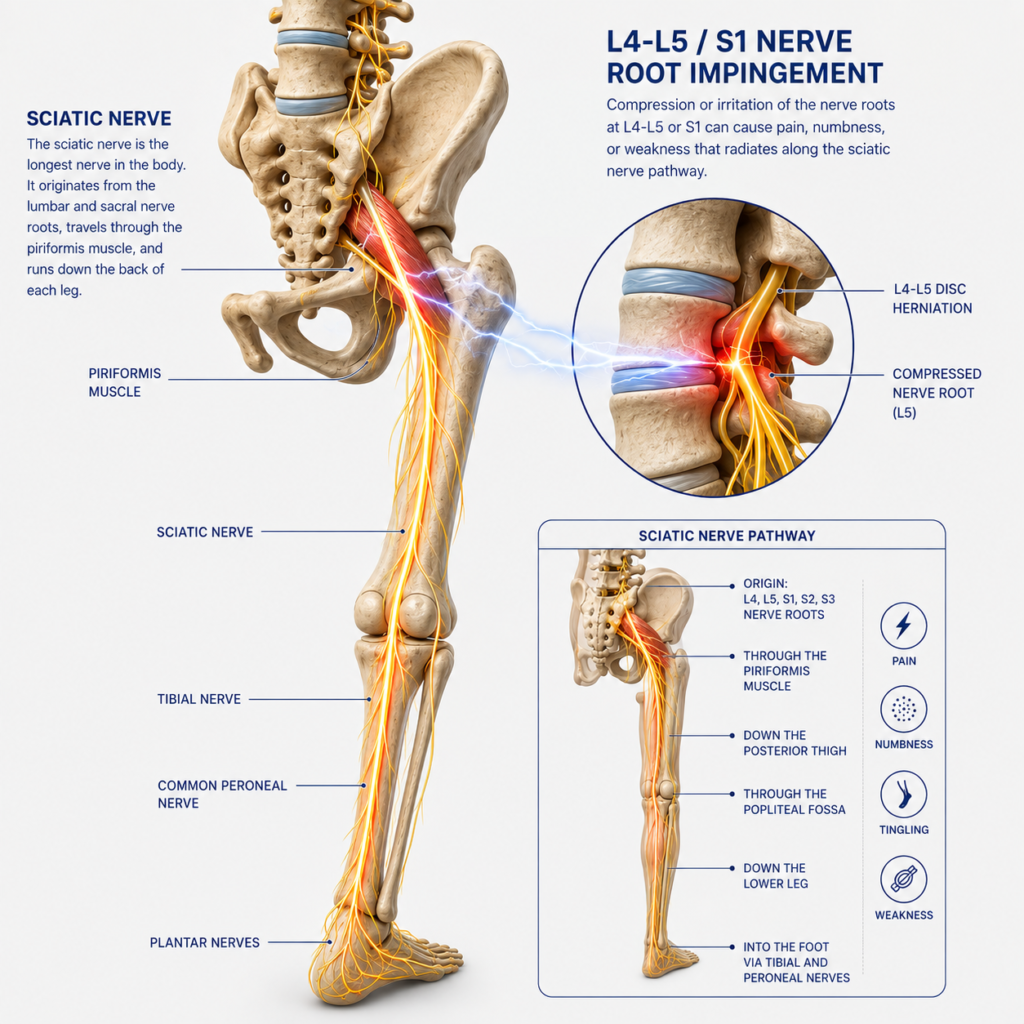
Sciatica is a severe, excruciating neuropathic pain condition caused by the compression, irritation, or inflammation of the sciatic nerve—the single longest and widest nerve in the human body. Originating from the lower lumbar and sacral spine (nerve roots L4, L5, S1, S2, S3), the sciatic nerve travels deep through the pelvic buttock region and branches all the way down the back of the thigh, calf, and into the soles of the feet and toes.
When an intervertebral disc in the lumbar spine herniates, bulges, or slips out of place, or when the deep piriformis muscle spasms into tight contraction (Piriformis Syndrome), it exerts severe mechanical pressure on the sciatic nerve sheath. This compression sends agonizing, shooting electrical shockwaves and burning sensations down the entire length of the leg, rendering sufferers unable to walk, stand upright, sit comfortably, or sleep peacefully. Conventional medical care frequently suggests epidural steroid injections or risky spinal decompression surgery.

Common Symptoms
- Sharp, shooting, electrical shock-like pain radiating from the lower back through the buttock and down the leg.
- Persistent burning, throbbing, or searing pain typically concentrated in one leg.
- Numbness, loss of sensation, and severe "pins and needles" tingling in the calf, ankle, or foot.
- Significant muscle weakness in the leg or foot, leading to difficulty lifting the toes (foot drop).
- Agonizing pain flare-ups when attempting to stand up from a seated position or when coughing.
- Inability to bend forward, walk normal distances, or bear full body weight on the affected limb.
How Neurotherapy Cures Sciatica
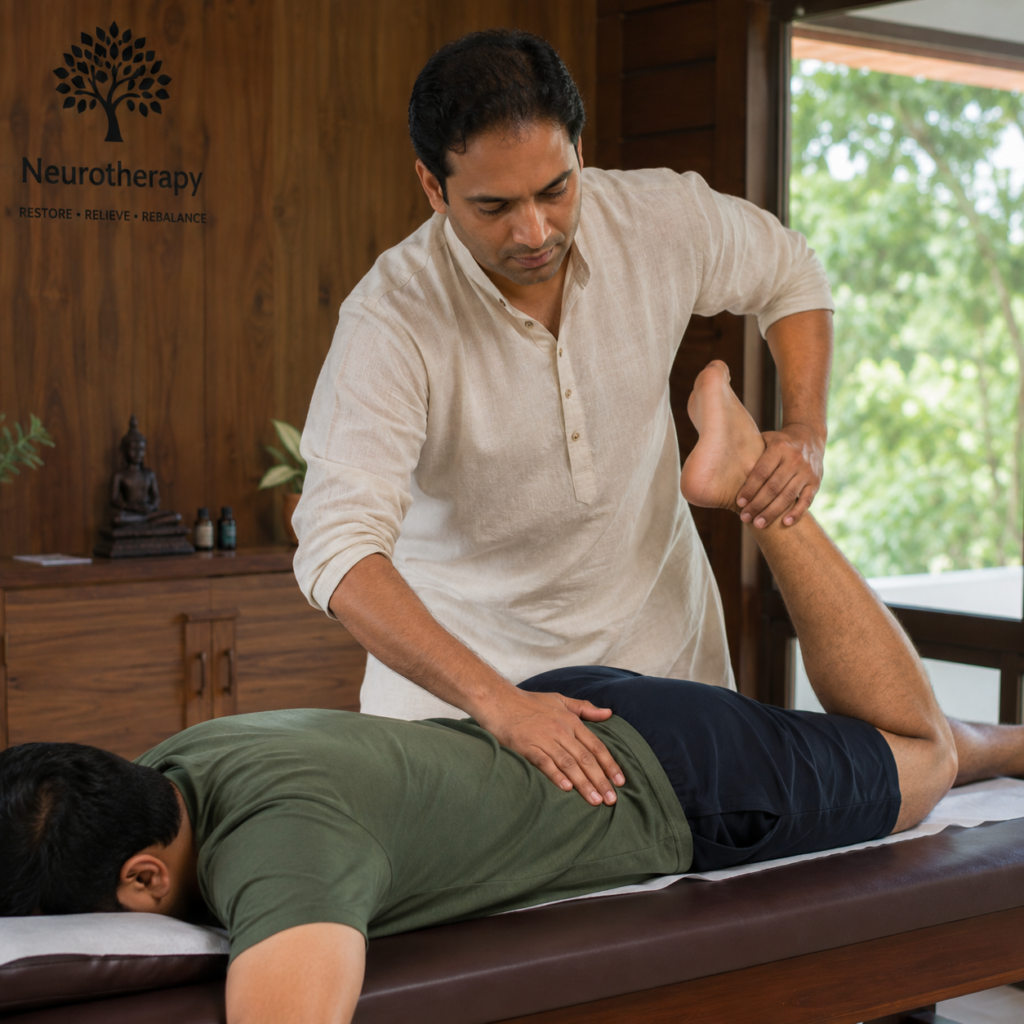
Neurotherapy offers one of the most reliable, non-surgical clinical treatments for sciatica by directly decompressing pinched nerve roots and restoring normal spinal and pelvic biomechanics. The therapy avoids temporary chemical pain masking, focusing entirely on eradicating the mechanical root cause of nerve impingement.
The Neurotherapy specialist applies specialized, precise pressure techniques across the lumbar, sacral, and piriformis reflex points. This targeted stimulation creates an intra-spinal decompression effect that eases herniated discs away from the sciatic nerve roots and completely relaxes chronic piriformis muscle spasms. Simultaneously, targeted stimulation of the **Adrenal reflex points** triggers the rapid secretion of natural anti-inflammatory hormones, dissolving localized nerve sheath edema and restoring seamless nerve conduction. Patients experience dramatic pain relief within the first few sessions and achieve lasting recovery without surgery.